
REFINE THE REFLECTION
Car Paint Correction in NYC
Paint correction is a measured polishing service for suitable glossy paint. It can improve the appearance of certain swirl marks, haze, and surface defects, but it begins with a condition review rather than a promised percentage of perfection. For a New York daily driver, the most useful result is often a considered improvement that respects the available finish and the way the vehicle will be used.
Plan your detail
A little about your car. A clear starting point for its care.
§ 01 / The details
Start with a clear scope.
Use these items to discuss the work. The final inclusions depend on your vehicle and the agreed appointment.
- Paint history and visible defect review
- Preparation scope matched to contamination
- Test area where appropriate to agree expectations
- Polishing level selected for suitable glossy paint
- Agreed protection after refinement
- Final inspection and maintenance discussion
§ 02 / The service
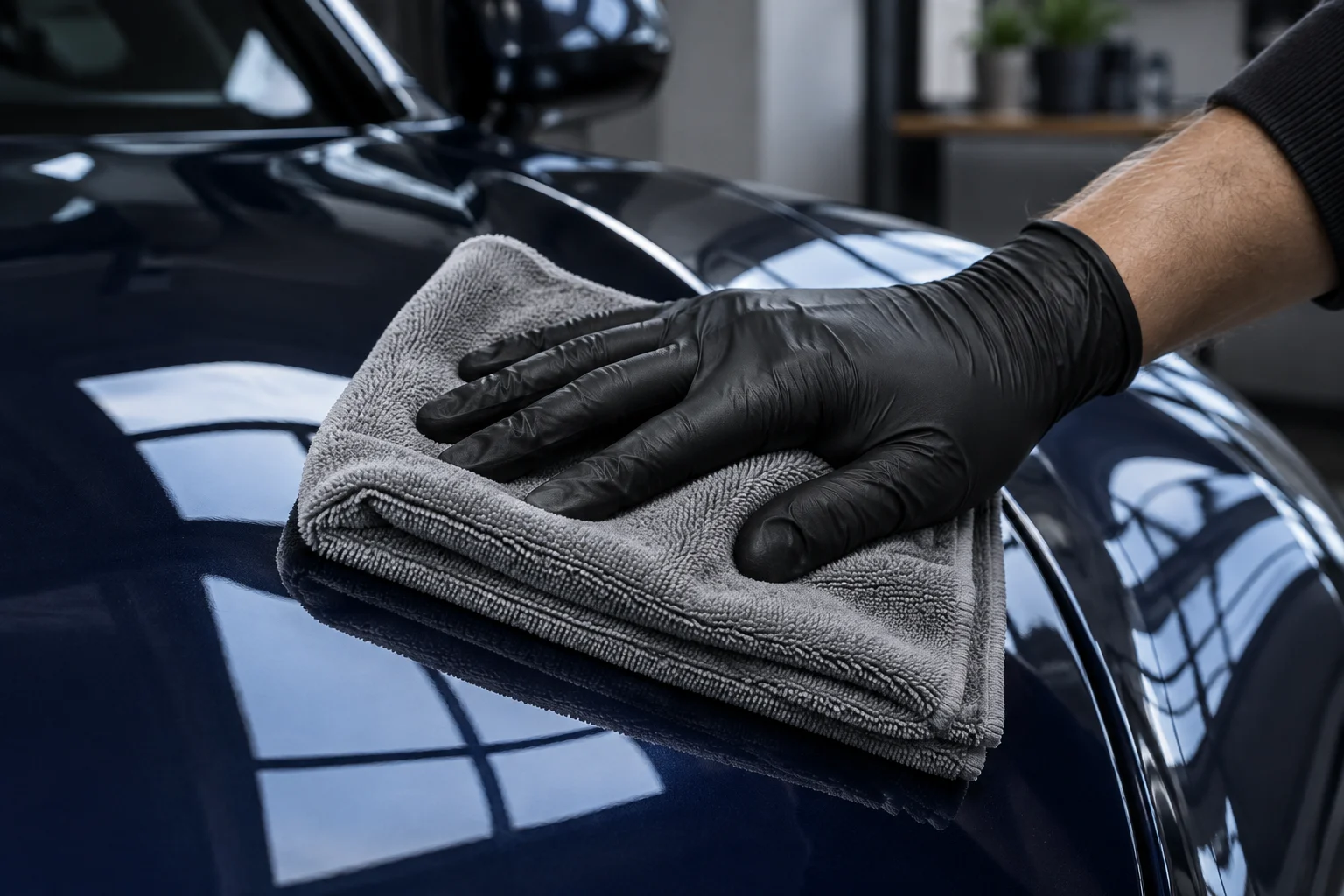
Understand what is on the paint
Not every visible mark is a scratch, and not every scratch belongs in a polishing plan. Residue, water spotting, poor prior work, repaint differences, chips, and failing clear coat can look similar in a quick phone photo. Useful estimates begin with daylight photographs and then an inspection in suitable lighting. Disclose previous paintwork, body repairs, polishing, coatings, and any panel with an uncertain history. Those details help identify where a conservative approach is needed and where a body shop assessment may be more appropriate.
§ 03 / The details
Use a test area to set expectations
A test section on a suitable part of the vehicle can show how the finish responds and whether the proposed level of improvement is worthwhile. Some vehicles benefit from a focused single polishing stage; others need a more involved sequence to address visible defects. More stages are not automatically better. The scope should balance the appearance you want with the surface condition and remaining limitations. Expect a discussion of defects that will be left in place, particularly where pursuing them would require an unsuitable amount of abrasion.
§ 04 / The service
Keep preparation and protection in the estimate
A correction estimate should explain the cleaning and preparation steps as well as the polishing itself. Working on contaminated paint makes it harder to judge the finish and plan consistent work. Trim and sensitive areas also need consideration before tools reach the surface. After refinement, a suitable protective finish may be part of the package or a separate selection. Ceramic coating involves its own preparation, application conditions, and aftercare requirements. Clarify the complete sequence so the quote reflects the finish you actually expect to receive.
§ 05 / The details
A controlled setting matters in the city
Polishing requires stable access to the vehicle, enough room around each panel, appropriate light, and conditions suited to the materials being used. A narrow curbside space or a busy garage aisle may not provide that environment. Share garage policies, vehicle clearance, power availability, and access hours early. For an exposed location, weather can affect whether the work can be completed consistently. The handover should include a review under useful lighting and practical advice about subsequent washing, especially if frequent city parking makes ongoing maintenance a challenge.
§ 06 / Common questions
A few details,
before the detail.
Clear expectations make the appointment better. Start with the questions people ask most.
More answers ↗Can every scratch be polished out?
No. A scratch may be too deep, or the surrounding finish may not support further correction. Chips, missing paint, and failing clear coat are repair concerns. The estimate should identify likely limitations instead of promising complete removal.
Is paint correction suitable for matte paint?
Conventional gloss correction is not the appropriate default for a matte or satin finish. Polishing can alter the intended appearance. A wrap, paint protection film, or unusual finish requires its own manufacturer guidance and a separate assessment.
Should a new car receive correction?
Only its condition and your goals can answer that. A recently purchased vehicle may be clean enough for a simpler preparation plan, or it may have visible marks. Inspect first and choose the work that addresses an observed issue.
How many polishing stages do I need?
A test area and condition review are more useful than choosing the largest package name. The proposed stages should have a clear purpose, a realistic expected improvement, and an explanation of defects that will remain after the work.
§ 07 / The details
Local care. Citywide planning.
Choose a borough for neighborhood-specific access and appointment guidance.
§ 08 / The details
Related care for your vehicle.
The right care starts with the right details.
Tell us about
your car.
And your block.
Your vehicle, its condition and a practical place to work. Those three details help shape a useful, clearly scoped appointment.
- Choose the work your vehicle actually needs.
- Explain garage, driveway or other access.
- Agree the scope before work begins.
Start with your car
A little about your car. A clear starting point for its care.